The climate, the dramatic landscapes, the warmth and calm of the people, the cultural diversity and the sheer amount there is to discover — these are some of the reasons I love Argentina’s Northwest. Every time I visit, it gives me a sense of peace, like it’s inviting me to stay a while — the kind of place made for taking your time and getting to know it properly (and why not, slowing down a notch).
I’ve thought more than once about settling in for a few months to work remotely and explore the Quebrada de Humahuaca properly. But something always holds me back: the towns and villages up there are very small. Transport isn’t as steady as it is in cities, accommodation is limited and tends to be pricier, and from what I’ve heard, wifi isn’t always reliable. With that picture, keeping up a work routine gets complicated.
Accepting that the Quebrada isn’t exactly nomad-friendly — and leaving that trip for another time — I think Salta is a strong option to consider for slow travel.
With that as a starting point, this guide covers what to do in Salta city and which day trips are worth it from a fixed base — built for traveling with more time, without packing up every day or rushing from place to place. It’s geared toward slow travel, but it also works if you’re planning a shorter trip and want a clear sense of what to see in the city and how to use Salta as a hub for exploring the Northwest.
Table of Contents
Why Salta?
Because it’s a beautiful city, full of things to see, with an active cultural scene. There’s a reason locals call it La Linda. It’s well connected and easy to reach (including with low-cost flights), and its strategic location in the middle of the region makes it an ideal base for exploring the Northwest. From here you can visit other provinces and ecoregions on full-day trips, so it works perfectly as a home base for slow travel.
Where to stay
If it’s your first time in Salta, I’d recommend staying within the historic center, close to Plaza 9 de Julio. Staying near the plaza puts the main historic sites, cultural centers, places to eat, and everything you need within easy reach — no need to depend on transport to get around.
And something practical: if you’re booking day tours, agencies usually only pick you up if you’re staying in this area. Otherwise, they’ll give you a meeting point. At 6 a.m., that becomes a real hassle.
Around the plaza there are hotels in every category (from luxury down to 2- and 3-star), apartments for longer stays, and well-located hostels.
I stayed at a hostel one block from the plaza and loved it. I went in low season, so it was quiet, and there were still travelers from all over the world. Salta gets international tourism year-round.
What to do in Salta
Salta has something for everyone: sites central to Argentine history, pre-Columbian art and culture, colonial architecture, folk music and dance, nature a short trip from the city… and wine and empanadas. What more do you need?
Historic center
Plaza 9 de Julio is the heart of the city and the logical starting point for getting your bearings. As in many colonial cities, the cathedral, the cabildo, some public buildings, and traditional cafés are all clustered around the plaza. Today you’ll also find several museums, confiterías, and classic restaurants here.
The free walking tour leaves from this point (I’d recommend searching “Free Walking Tour Salta” when you’re about to travel and checking the schedule). For me, it’s one of the best ways to get a first read on the city: someone tells you what you’re looking at, why it matters, and how it connects to local history. Afterward, with more time, you can go back on your own to whatever caught your interest.
High Mountain Archaeology Museum (MAAM)
For me, the number one must-see in Salta.
It’s right in the center, facing Plaza 9 de Julio, and it’s a short but intense museum. It holds archaeological pieces of enormous value and is a model when it comes to heritage preservation.
The museum’s best-known holdings are the Llullaillaco mummies — children who were part of Andean ritual practices, found at over 6,000 meters of altitude, in uniquely preserved conditions. The museum displays one mummy at a time, on rotation, and a lot of people come back three days in a row to see all of them.
I’d studied this topic in university and watched documentaries about it, but seeing it in person was striking.
Bring a light jacket. The room where they’re preserved is kept around 12°C (54°F) to protect them. Last time I went it was very hot outside, and I regretted not bringing something warm.
San Francisco Basilica and Convent
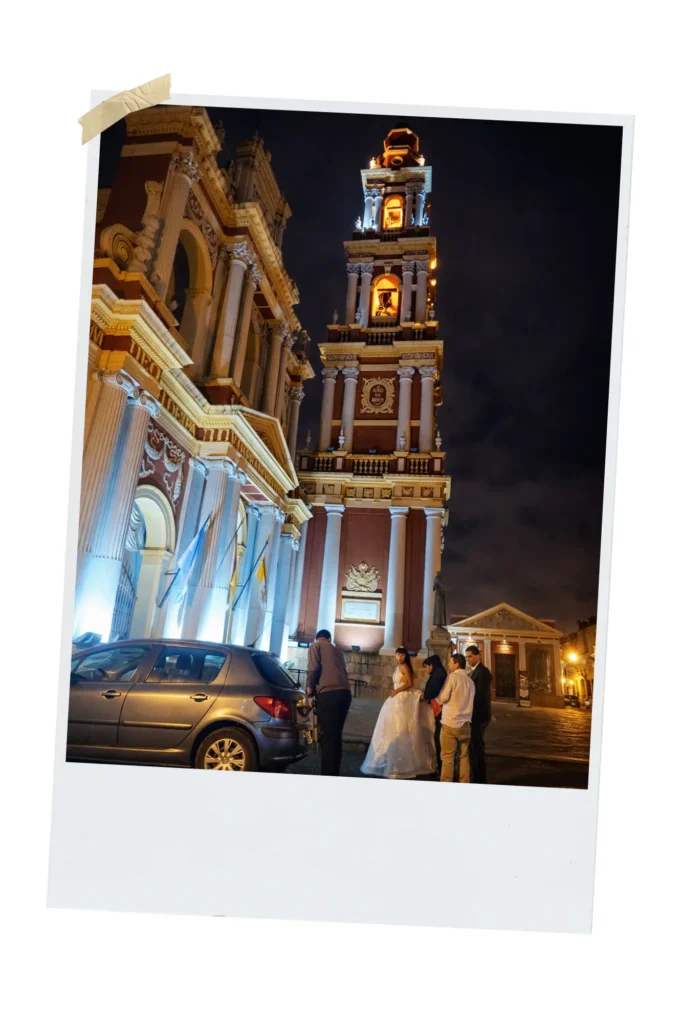
The San Francisco church is one of the most photographed buildings in Salta, and it’s easy to see why: its dark red neocolonial façade, white columns, and bell tower lit up at night make it instantly recognizable.
Beyond its architectural value, it holds a historic piece: the Independence Bell, cast from metal taken from weapons used by the Army of the North, tied to Manuel Belgrano’s campaigns through the region.
The last time I went, I was eating empanadas at a traditional spot right across the street when a bride showed up to take photos with the church as a backdrop. Between the lighting, the dress, and the colonial architecture, the scene was impossible to ignore. That’s where one of my favorite photos of Salta came from.
Cable car and Cerro San Bernardo
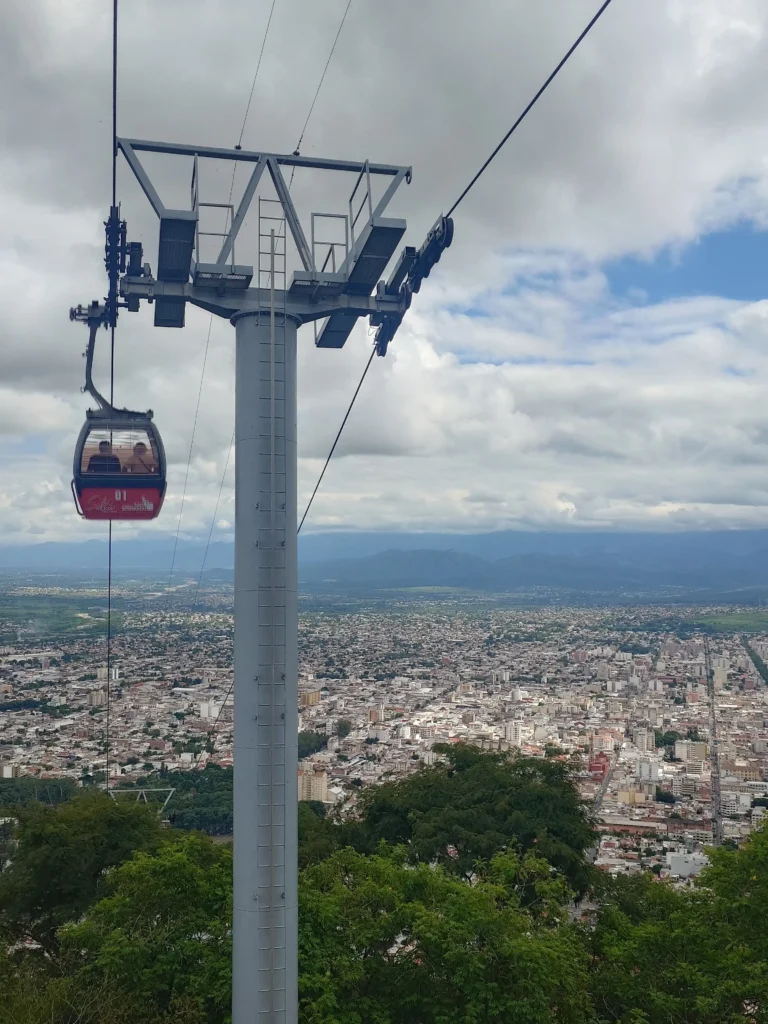
A classic, easy activity. The cable car departs from Parque San Martín and climbs to the top of the hill, where you’ll find:
- viewpoints over the Lerma Valley
- walking trails
- a small botanical garden with local flora
- bars and terraces
You can go up by cable car, on foot (short but steep trail), or by car. To come back down, you can also rent a bike.
In recent years a new cable car section was added connecting the summit to another part of the hill, Teleférico Ala Delta, which links the top with another section of the hill and offers more panoramic views. That area also offers paragliding flights, which are easy to book.
Parque San Martín
The cable car departs from this park, which is also nice for walking. There’s a lake, paddle boats, and a fair selling crafts and local sweets. Among those sweets, I’d recommend trying honey and coca leaf candies, very common in the region, which help quite a bit if you’re heading somewhere at altitude.
One tip on crafts: you’ll often find similar — and sometimes nicer — pieces in the Quebrada de Humahuaca, usually cheaper too. If you’re planning to visit Humahuaca or another small town, you might want to buy there instead.
Food
Salteñas (Salta-style empanadas) are famous across Argentina: thin dough, smaller size, knife-cut beef, and a distinctive touch of seasoning. Spice is usually optional — they bring it on the side.
Within the local variety, at La Salteñería you can also try potosinas, a larger Bolivian-style version filled with chicken, potato, onion, and olives, with a slightly sweet dough that sets them apart.
It’s also worth trying tamales and humitas, two Northwest classics that are done very well in Salta.
And about empanadas, I’ll say it plainly: the best ones I had were at an old spot right across from the entrance to the San Francisco church. It doesn’t show up on Google Maps, but if you walk by the church, you’ll recognize it right away.
Viracocha is an interesting place for its concept and for its craft beer made with coca leaves. I tried it and liked it, and ended up drinking IPAs afterward with some Viennese friends I’d met on the walking tour. Good atmosphere, good service, and flavors you don’t run into elsewhere.
Folk music venues (peñas)
Peñas are a living part of Salta’s culture: live music, zambas, dancing, traditional food, and a very local atmosphere.
The three most popular:
- La Vieja Estación (classic and touristy, but always delivers)
- La Casona del Molino (more local, shared tables, spontaneous musicians)
- Peña Balderrama (historic, part of Argentine folk tradition)
If you’re not Argentine, keep in mind that dinner happens late: many peñas start around 10 p.m.
Day trips from Salta: landscapes, culture, and different ways to see the north
Toward Jujuy
Several full-day trips leave Salta for the province of Jujuy. The two most common routes share the first stop — Purmamarca — and then split:
- one continues to Salinas Grandes
- the other goes deeper into the Quebrada de Humahuaca: Tilcara and Humahuaca
Both are worth doing, but they offer very different experiences.
Purmamarca
The entire Quebrada de Humahuaca is a UNESCO World Heritage Site, and Purmamarca is one of its most iconic towns: a market on the plaza, adobe streets, multicolored hills, and the classic postcard view of the Cerro de los Siete Colores (a natural monument).
You’ll most likely arrive early and have somewhere between 40 minutes and an hour. That’s not much time, but it’s enough if you use it well.
The first thing I’d recommend doing on arrival is, right inside the bus terminal, going up a small staircase that leads to a terrace with an excellent view of the town. It’s worth doing as soon as you get off the bus, because if several tours arrive at once, it fills up fast and there can be a line for photos.
From there you’ll see the giant letters spelling out Purmamarca, the Cerro de los Siete Colores, and part of the town behind it. It’s the best photo spot, and faster than the more famous viewpoint guides usually point you to.
After that, you can walk to the plaza, browse the crafts market, step into the town church, and grab a tortilla al rescoldo — a local flatbread, perfect for breakfast. It’s also worth just sitting for a bit and taking in the atmosphere, which is genuinely special.
There are hikes to the base of the hill and to a lookout point, but with the excursion’s limited time, you’ll have to pick. I prioritize the plaza, the market, some food, and the church.
Salinas Grandes
After Purmamarca, the route continues north, crossing the Cuesta de Lipán until you reach Salinas Grandes, a massive salt flat in the middle of the altiplano.
Along the way you pass through very different landscapes: you leave the valley in Salta, cross transitional jungle, enter a more arid canyon environment, and suddenly arrive at a white plain that seems endless.
The salt flat is extremely photogenic. You can get striking photos playing with perspective and with the reflections in the water pools when there are any. It’s a trip that tends to appeal to people who enjoy wide-open landscapes and scenery that looks like another planet.
That said, if you’re more drawn to the cultural side and the history of the north, you’ll probably connect more with the other option: the route into the Quebrada de Humahuaca.
Both Salinas Grandes and the Train to the Clouds reach significant altitude. It’s common for agencies to recommend altitude pills, or the more local option, chewing coca leaves — easy to find at markets and kiosks.
The full Quebrada de Humahuaca (Tilcara + Humahuaca)
The other option after Purmamarca is to continue through the Quebrada de Humahuaca. For me, this is the more interesting choice if you want to understand the region, its towns, and its identity a bit better.
The whole quebrada is a cultural corridor with a strong presence of Indigenous communities, Quechua influence, and stretches that were once part of the old Inca Road. Even outside Carnival season, you’ll likely hear about the festival, the comparsas, and local traditions — enough that a lot of people want to come back just for that.
Tilcara
The tour passes through, but there isn’t real time to visit the museum (very thorough) or the Pucará de Tilcara archaeological site. These are places that deserve hours, which is why they don’t fit into a one-day tour.
One alternative is the new tourist train that connects towns along the quebrada — I personally found it expensive, but it’s an option. Another is going on your own by local bus: it’s not very visible online, but it exists. At the bus terminal, or by asking locals, you’ll find schedules.
Humahuaca
The first stop is at a local eatery serving traditional dishes, including llama or goat stew. Few options, but tasty and very affordable.
The tour usually adds a really nice touch: a local guide gets on the bus as soon as you arrive, telling you about the town’s history, traditions, Carnival, and Andean identity in the region. I loved that part. They’re trained professionals from the city’s public institute, and their participation — with voluntary financial contributions from passengers — is part of local development, since it’s a direct source of income for the community.
Beyond explaining the history and traditions of the place, they usually walk the group from the eatery, past the church, to the plaza and the Monument to the Heroes of Independence.
At the plaza, you’ll find the typical market, where crafts are cheaper than in Salta: clothing and textiles, ceramics, instruments, and more.
On the way back, arriving in Maimará, you’ll see the Paleta del Pintor (Painter’s Palette), a multicolored formation framing the town. There’s usually a photo stop from the road — one of the prettiest views of the trip.
Cachi, via the Cuesta del Obispo and Los Cardones National Park
The road to Cachi is one of the most varied in the region. In just a few hours, you pass through completely different environments.
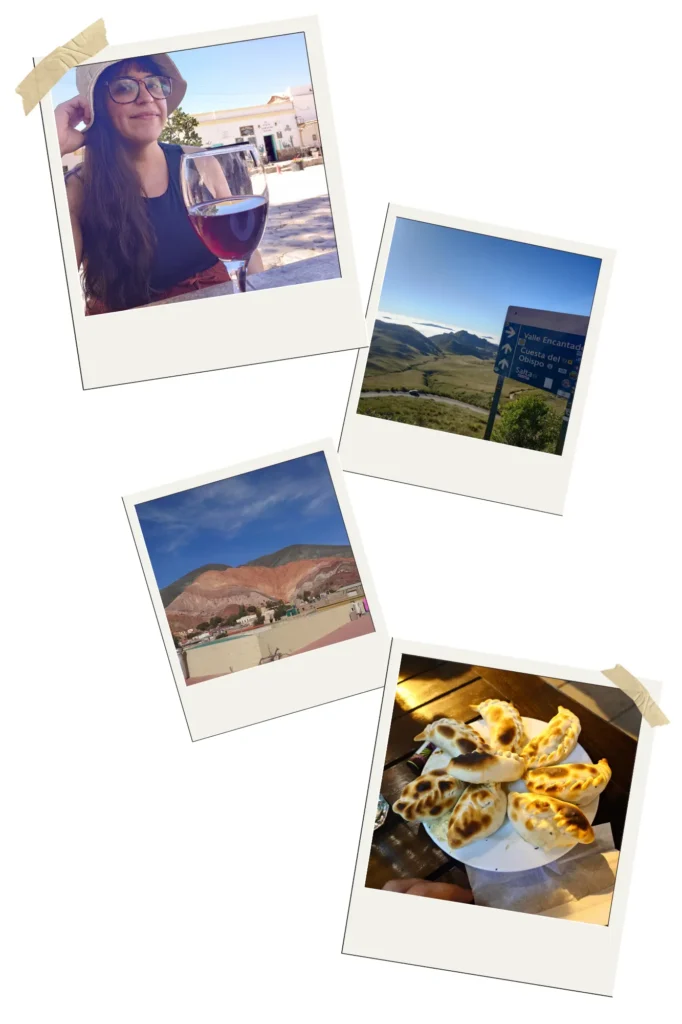
The day I went, the morning started in fog and mountain jungle. Climbing the Cuesta del Obispo, the landscape opened up completely: a sea of clouds below, green mountains above.
Something that always strikes me about the yungas is how clearly the vegetation and color shift as the altitude increases — like watching, in real time, those layers we used to talk about in heritage studies class.
Further on, the surroundings change again, and a dry, bright valley appears, full of giant cardón cacti: Los Cardones National Park.
Along the way, there’s usually a stop at a stand selling nuts, sweets, cheese, and local spices. The area is well known for its paprika — if you like cooking, it’s worth bringing a small bag home.
Tip: bring cash. Signal tends to be weak, and most of these spots don’t take cards.
Arriving in Cachi, the tour leaves time for:
- a relaxed lunch
- walking around the plaza
- visiting the Pío Pablo Díaz Archaeological Museum (I managed to see it all without rushing)
- walking through the crafts fair
I had a stuffed pepper paired with a local wine, and it was one of the best lunches of the trip. I’d also recommend the artisanal ice cream in regional flavors: algarrobo (carob), tuna (prickly pear), and vino patero (a local wine-based flavor).
It’s a full-day trip: we left around 6:30 a.m. and got back to Salta around 8 p.m., with the same bus dropping us off at our accommodation.
Tafí del Valle
Tafí del Valle has a different microclimate: greener, more humid, and cooler than other parts of the north. It’s a good option if you’re drawn to valley landscapes, archaeology, and high-altitude wines.
One of the highlights is visiting the park where the menhires are gathered — stone pieces carved by pre-Hispanic cultures. You can walk among them and take in the different shapes and motifs.
The area has small wineries and producers. Some tours include a high-altitude wine tasting, or a stop at places that also make cheese and other regional products.
Along the way, there’s usually a stop at the bridge where one of the short films from “Relatos Salvajes” (Wild Tales) was shot (El más fuerte). For anyone who’s seen the movie, it’s a nice nod and a good photo moment.
Train to the Clouds
The Train to the Clouds (Tren a las Nubes) is one of the most iconic experiences in northern Argentina. Today it runs as a combined bus-and-train route, with the best-known rail section at the impressive La Polvorilla Viaduct, where the landscape opens up and the scale of the structure really hits you.
The main appeal is the engineering of the route: the train gains altitude gradually, including zigzag maneuvers and reverse sections to handle steep grades. The puna landscape is immense, and the sense of altitude is real.
As with Salinas, altitude is felt here. It’s common to recommend chewing coca leaves or using other strategies to ease altitude discomfort, especially if you’re not used to it.
In recent years, there have also been themed trips for special dates: decorated departures for St. Patrick’s Day with beer on board, or Valentine’s Day trips where couples get married during the ride.
Beyond the trip itself, the train has an impact on several local communities, which partly sustain themselves by selling food and crafts to passengers arriving at the stations. It’s another example of how tourism, when managed well, can help keep these towns alive.
How to combine the day trips
There’s no single way to see the Argentine north. Each excursion shows a different side of the region.
My suggestion is to combine at least one trip toward Jujuy and one toward the Calchaquí Valleys. From there, depending on budget, energy, time, and how you’re feeling, the Train to the Clouds can be a third experience to round out the picture.
It’s not about fitting in every possible activity, but about choosing the ones that genuinely add to your trip and doing them at your own pace.
Conclusion
Salta works especially well when you think of it as a base, not just another stop along the way. It’s a city that lets you stay, get around comfortably, get to know its history and everyday life, and at the same time head out to explore some of the most iconic landscapes of northern Argentina — without changing accommodation every day.
Using it as a base doesn’t mean doing every possible excursion or sticking to a fixed itinerary. On the contrary: it lets you choose, mix longer trips with quiet days in the city, and adapt the route to the time and energy you have on a given trip. Whether you’re staying for several weeks or just a few days, Salta offers that balance between a livable city and a gateway into the Northwest.
There’s no single way to see the Argentine north. But if you’re looking to get to know the region with more breathing room, without rushing from place to place, and with the chance to go deeper into what genuinely interests you, Salta is one of the best decisions you can make to start — and to always come back to.
Where I stayed in Salta
During my stay in Salta, I stayed at Ferienhaus Hostel Salta, a pleasant, well-located hostel just one block from Plaza 9 de Julio. They offer both shared dorm beds and private rooms, and the staff were always very friendly. It felt like a solid base for staying several days in the city — [here’s the Booking link] so you can check availability and prices.