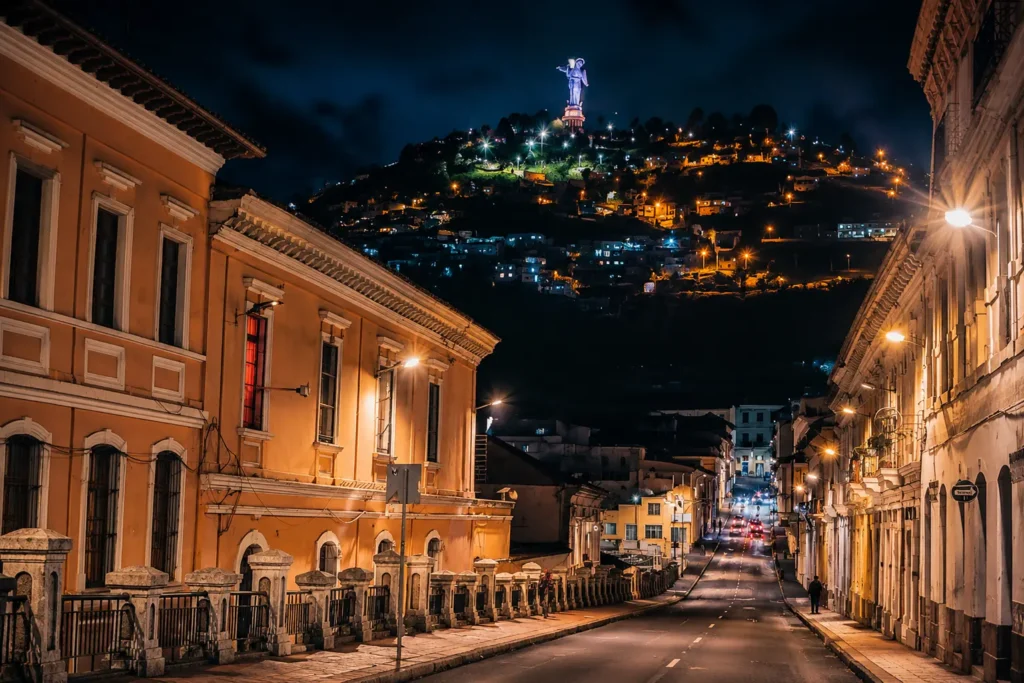
Quito rarely makes it onto anyone’s Latin America wishlist as a destination in its own right. It shows up on itineraries as a connection point — the city you fly into before the Galápagos, or a logical pause on the way north from Peru. Experienced travelers move through it. First-timers often skip it entirely.
That framing undersells it significantly.
Ecuador ranked 15th globally in tourism growth in 2025, with international arrivals to Quito up over 10% year-on-year — and climbing. The city is actively repositioning itself, showing up at major travel trade fairs and launching its first serious international campaigns. Something is shifting.
Spending over a month here, talking to hundreds of international travelers, the pattern is consistent: almost nobody came to Quito first. The people here are experienced — slow travelers, digital nomads, people already months into a Latin America trip. Many stay longer than they planned.
I came from the Colombian border on a surprisingly cheap bus, without much of a plan and without high expectations. I’m still here — and leaving is proving harder than expected.
Table of Contents
Why Quito works for slow travel
Quito is a big Latin American city — markets, traffic, noise, the kind of organized disorder that’s just part of moving through this part of the world. That’s worth saying clearly, because it shapes everything else.
What’s less expected is how functional it feels for its size. Walkable in the right neighborhoods, easy enough to navigate, with a pace that doesn’t demand to be consumed quickly. It’s not as loud as Colombia. The traffic is nowhere near Lima. For a city of two million people, it’s reasonably orderly — and that balance matters when you’re staying somewhere for weeks, not days.
The altitude takes care of the first couple of days anyway. You slow down whether you plan to or not.
What sustains a longer stay is that the city has enough layers to keep revealing itself gradually. Different neighborhoods with different registers — the colonial center for walking and looking up, La Floresta for cafés and creative energy, La Carolina for parks and practicality. Enough cultural depth to fill weeks without a checklist. And a cost of living low enough that the financial pressure of staying longer simply doesn’t exist the way it does in other cities.
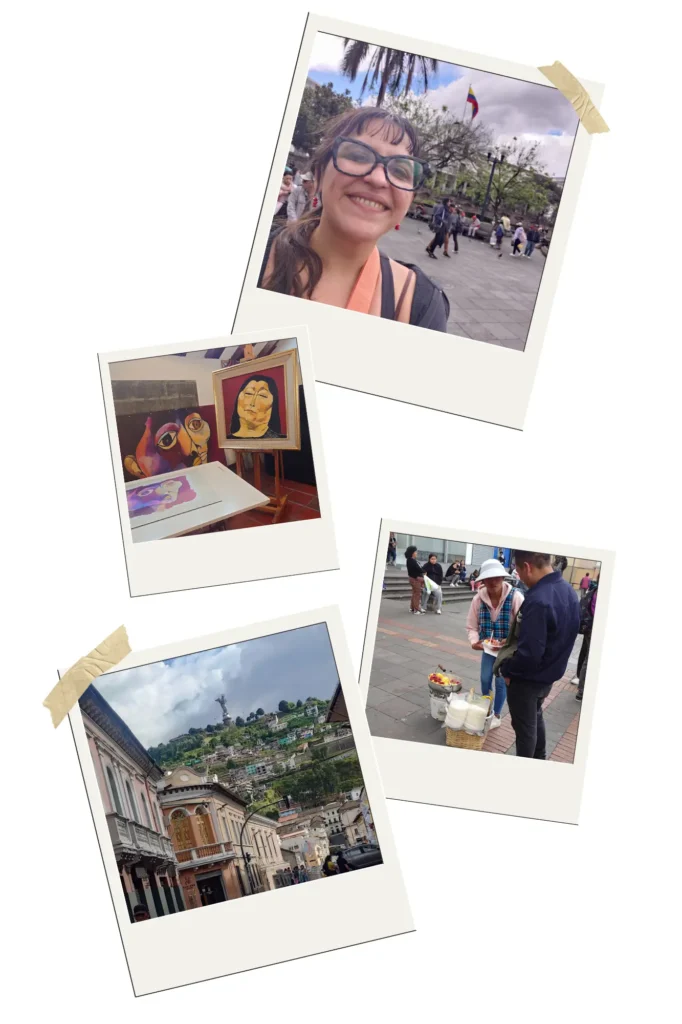
Quito also works as a base. The geography of Ecuador means that cloud forests, volcanoes, indigenous markets and hot springs are all within a few hours. You can spend a weekday working, a weekend somewhere completely different, and return without the logistics eating your week.
That combination — functional city, real cultural depth, low cost, easy access to nature — is what slow travel actually needs. Not a single spectacular attraction, but a place that sustains a rhythm over time.
Quito does that quietly, without making a lot of noise about it.
Planning a long stay: Quito as a base
Ecuador is a small country, and Quito works well as a slow travel base precisely because of it. From the city, a range of smaller nature destinations are within a few hours — some manageable as a day trip, others worth dedicating a few nights.
Mindo
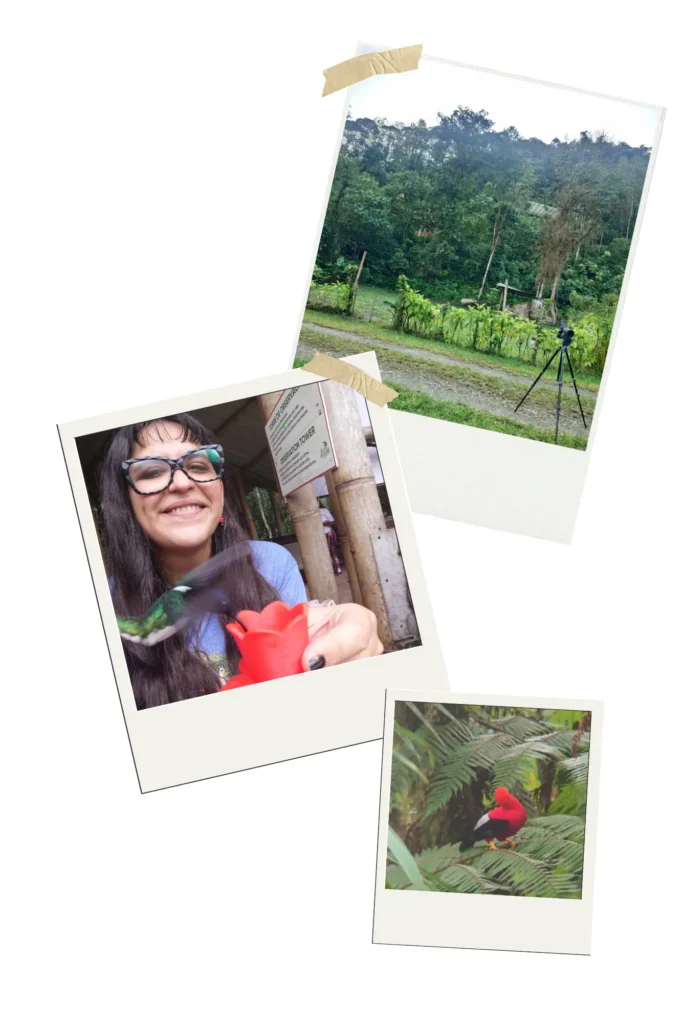
Two hours from Quito, the contrast is immediate. The dry air of the city gives way to a humid, warm cloud forest environment — dense, green, and surprisingly close. It rains often in Mindo, mostly at night, while mornings and afternoons tend to be clear. The town is small and safe to move around alone.
The area is best known for wildlife and adventure activities, and it earns that reputation. Birdwatching is the standout — the region has four species of toucan, and the dawn tour to the cock-of-the-rock viewing deck is something else: a bird endemic to the area, doing its mating display at first light. On the same tour, a quetzal. There are also dedicated birding spots where you can hand-feed hummingbirds, with observation towers and feeding stations. The butterfly houses are worth a visit, and the night walk covers a different side of the ecosystem — glass frogs, arachnids, reptiles, species that don’t show up during the day.
For the more active, there are trails, waterfalls, and adventure options: tubing, fishing, four-tracks (though Ecuatorians call them cuatrimotos), cycling.
On the same route sits one of Ecuador’s most visited landmarks: La Mitad del Mundo, the monument marking the equatorial line, about an hour from Quito. The exact location is somewhat debated, but the site has a tourist complex, on-site museums, and the experience of standing on the line that divides the planet in two.
Otavalo
About two hours north of Quito, Otavalo is home to the largest indigenous market in Latin America. The Plaza de los Ponchos runs every day, but Saturdays are when it takes over the surrounding streets entirely — textiles, crafts, and produce from the Otavaleño communities, a people with a weaving tradition that predates the Inca. The town sits in a valley surrounded by volcanoes and crater lakes worth exploring if you stay more than a day.
Cotopaxi
Less than two hours south of Quito, Cotopaxi is one of the highest active volcanoes in the world, sitting at 5,897 meters with a permanently snow-capped summit. The national park around it is the main draw — open highland landscape, Andean wildlife, and the kind of cold, clear air that feels different from the city. Hiking and mountain biking are the most popular activities; those with experience and proper preparation can attempt the summit with a guide.
Quilotoa
About two and a half hours from Quito, Quilotoa is a volcanic crater lake at 3,900 meters, with water that shifts between green and turquoise depending on the light. The descent into the crater is doable but the climb back up is genuinely demanding at that altitude — worth knowing before you go. From the rim there are views over the surrounding Andean highlands. The Quilotoa Loop is a multi-day trek connecting the villages around the crater for those who want more than a day visit.
Baños
Three and a half to four hours from Quito, Baños sits at the foot of the active Tungurahua volcano and marks the gateway to the Amazon. The town is known for adventure sports — rafting, bungee jumping, canyoning, zip-lining — and for its thermal baths fed by the volcano. A road out of town follows a route of waterfalls, the most visited being El Pailón del Diablo.
What things actually cost in Quito
Quito is one of the more affordable cities in the region — and the quality holds up.
Accommodation is one of the better deals around. A bed in a good hostel runs under $10 a night. A private room in the same category stays under $30. For anyone thinking longer term, furnished apartments are available from around $600 a month in most neighborhoods — in Bellavista, one of the most upscale areas of the city, expect to pay around $800.
Food follows the same logic. The menú del día — a set lunch with soup, main, and sometimes juice — costs around $3 at most local places, and it’s genuinely good. That’s not a compromise option — it’s how a lot of people eat every day. A coffee and a slice of cake at a nice café runs around $5. On the other end, a dinner for two at a proper restaurant with dessert and drinks lands around $80 at the higher end. That’s the ceiling, not the average.
Getting around is straightforward and inexpensive. Uber and DiDi both operate here — a 30-minute ride averages around $6. The metro is worth mentioning separately: it’s only two years old, clean, and costs $0.45 per trip. You buy a ticket at any station — no card needed.
Long-distance buses from Quito are remarkably cheap. The ride from the Colombian border at Tulcán -about 7 hours- costs $6. Mindo, the cloud forest town about two hours away, is $3.60. Day tours to nearby destinations run around $50 with everything included — specific activities like birdwatching or rafting independently come out closer to $20.
One exception: clothing. Electronics, souvenirs, and most imported goods are reasonably priced. But fast fashion brands — H&M and the like — are a different story. Prices match what you’d pay in Europe, and in some cases more than in the US. Noticeably more expensive than Peru, for example. Not a dealbreaker, but worth knowing if you’re staying long enough to need anything from a high street store.
Ecuadorian Food: What to eat in Quito
Ecuadorian food doesn’t have the international reputation of Peruvian cuisine. It shares ingredients and influences with its neighbors. But it has its own identity — and it’s genuinely good.
Soups are a good place to start. Locro, encebollado, a whole range of hearty, cheap, well-seasoned options that show up everywhere. Ecuador also has its own version of ceviche — different from the Peruvian one, but it holds its own.
Being the capital, Quito also concentrates what the whole country has to offer — typical dishes, influences and ingredients from the coast, the sierra, and the Amazon all find their way here.
Breakfast deserves its own mention. Tigrillo — mashed green plantain, usually served with meat or egg and cheese — is one of those dishes that’s easy to become a regular. Bolón de plátano is in the same family. Then there are quimbolitos, sweet tamale-like parcels wrapped in corn husks, and muchín, a fried yuca cake. Bread and cheese are notably good here, which anyone coming from Colombia will appreciate immediately.
Markets are where the food gets most interesting. The centro is full of small spots selling almuerzo and breakfast from early morning. Street food is worth paying attention to — the pernil sandwich, slow-roasted pork, is a classic. So is the higo and cheese sandwich — a typical combination that works surprisingly well outside of its usual context.
For drinks: canelazo is the one to know. Not the Colombian version — this is a hot spiced drink made with naranjilla, heavily spiked, and exactly what the cool Quito evenings call for. On the other end of the night, a pincho from a street cart costs $2 and is hard to beat.
Ecuador is also the world’s leading exporter of fine-flavor cacao — the most sought-after variety. The coffee is good too. The chocolate industry hasn’t fully developed around that raw material yet, so you won’t find many artisan chocolatiers — but the chocolate bars here stand out in variety, flavor, and price.
Cash, cards, and the $100 bill problem
Ecuador dollarized over 25 years ago as a way to stabilize its economy — and from a pricing standpoint, it worked. Costs are stable in a way that’s rare in the region. But using USD here doesn’t work exactly like it does in the US.
One curious detail: for obvious reasons, Ecuador doesn’t issue bills. But it does mint its own coins, which circulate alongside standard US coins. The $1 bill is rarely seen here — it’s almost always a coin.
For store purchases, cash and card both work fine. Markets and street vendors run on cash. There’s also a local transfer payment system widely used among residents, but it requires an Ecuadorian bank account — inaccessible for most travelers and not worth pursuing.
Then there’s the $100 bill situation.
I arrived with my USD cash already feeling smug about skipping the exchange rate math. What I didn’t realize until much later is that nobody wanted my hundreds. Hand one over and people react like the bill is coated in mercury.
Turns out counterfeit $100s circulate heavily here, and depositing one at a bank requires a sworn declaration of its origin. Virtually nobody accepts them.
The solution, after some tension and a lot of fruitless attempts: the Banco Central. They’ll exchange them fast — just don’t forget your passport.
Geography, altitude, and what to actually expect from the weather
The logical assumption about a city 25 kilometers from the equator is that it’s warm. It isn’t.
Altitude changes everything. Quito sits at 2,850 meters above sea level — which makes it, technically, the highest capital city in Latin America. La Paz is higher, but Bolivia considers Sucre its official capital. We’ll let them have that one.
At that altitude, the air is thinner, the temperature drops, and the weather does something locals describe as having four seasons in a single day. After enough time here, the pattern becomes readable: mornings tend to be sunny, then sometime after midday clouds move in, and rain is likely — sometimes a proper storm, sometimes nothing. Even on a beautiful clear morning, a light layer is never a bad idea. The sun won’t last.
For anyone coming from a place with actual seasons, the strange part is the consistency. The weather doesn’t change much month to month — only hour to hour. As someone from Patagonia, that still doesn’t quite compute. What does feel familiar is the street scene: people in shorts and people in winter jackets, both perfectly correct, both walking the same block.
The altitude also affects the body in ways that aren’t immediately obvious. Heart rate runs higher here — a smartwatch will confirm it quickly. Stairs become a project. Exercise feels harder than it should. It’s just the plain old lack of oxygen, but it’s one of those facts that sounds implausible until you’re out of breath climbing to the second floor.
Long-term residents who weren’t born here end up with a higher red blood cell count — the body’s quiet, hyper-efficient adaptation to the conditions. A reminder that the city is changing your biology whether you notice or not.
One more thing worth mentioning, and easy to overlook: the sky. On a clear night — rare, but it happens — and from the right spot, Quito sits at a latitude where both the Southern Cross and the Big Dipper are visible. For anyone who grew up in the southern hemisphere watching the Southern Cross high overhead, seeing it low on the horizon here, just off to the side, is quietly disorienting. In a good way.
What to see and do in Quito
Quito doesn’t have a single landmark that justifies a flight on its own. What it has is density — a concentration of heritage, art, and cultural layers that takes time to work through, and rewards it.
The historic center is the obvious starting point, and it earns the attention. It was the first site in the world declared a UNESCO World Heritage Site. The architecture spans neo-baroque, neoclassical and neo-gothic styles, sometimes within a single block. But what makes it distinctive isn’t the European influences — it’s what happened to them here.
The Quito School refers to the artistic tradition that developed in the city during the colonial period — religious art and sculpture produced under Spanish influence but shaped by indigenous and mestizo culture. The syncretism is visible everywhere in the historic center once you know to look: local faces on saints, Andean flora in ornamental details, Catholic iconography that absorbed what it couldn’t erase. The Sagrario, next to the Cathedral, is one of the better places to see it up close. That same syncretism is what makes the 17th-century Last Supper in the nearby Convento de San Diego land the way it does — Jesus and the apostles eating cuy, humitas and chicha.
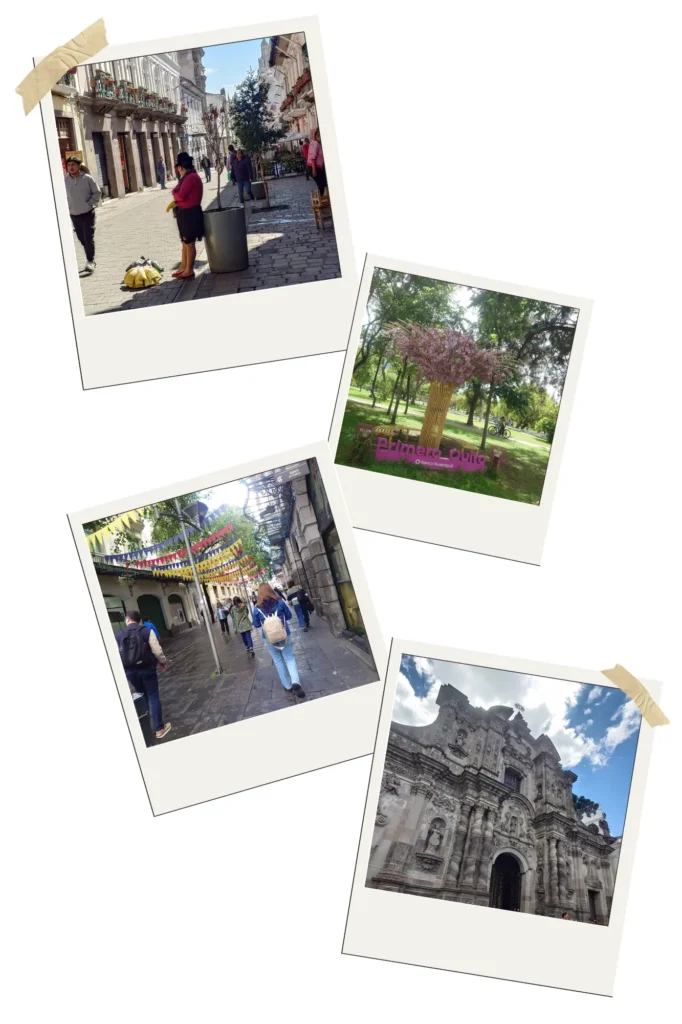
The Pre-Columbian Art Museum also has a presence in the historic center, as do artisans working with ancestral techniques — less as cultural display, more as actual trade.
Not everything is the historic center — two landmarks punctuate the city from above. The Virgen del Panecillo — a large aluminum statue of the Virgin Mary — sits on the hill that rises over the historic center and is visible from most of the city. The TelefériQo cable car climbs to over 4,000 meters on the slopes of Pichincha volcano, with views over the entire city and, on a clear day, several of the surrounding volcanoes.
Guayasamín is probably Ecuador’s most internationally recognized painter. In the Bellavista neighborhood, a single entrance gives access to the Capilla del Hombre — a museum dedicated to his work — and his house-museum next door. The neighborhood also has some of the best viewpoints over the city.
The more modern neighborhoods have their own architectural interest — brutalist buildings show up in notable numbers — and are well connected by the metro, barely two years old. Locals say it was inspired by the Madrid system, and going back with that in mind it holds up: one station in particular is strikingly similar to Príncipe Pío.
La Carolina is a large park in the middle of the city. Further out, in quieter and more residential neighborhoods, there’s plenty of space to walk and spend time without much going on around you.
Where to stay in Quito: a personal recommendation
For anyone staying in the historic center — which I’d recommend — Viajeros Quito is where I’ve been for the past six weeks, and I have no complaints worth mentioning.
It’s a large colonial house, which sets the tone: high ceilings, a patio, a terrace, coworking spaces. The location puts you within walking distance of most of what the historic center has to offer, and La Ronda — one of the better streets in the city for typical food and nightlife — is literally around the corner. The neighborhood gets quieter at night and it’s worth being sensible, but it hasn’t been an issue.
The hostel runs daily activities and has enough common space — bar, restaurant, pool table — that socializing happens without effort. Tours are offered at good prices. The atmosphere is genuinely relaxed without being the kind of place that makes you feel like you have to participate.
On the practical side: the rooms are comfortable even at the cheaper end, the mattresses are good, and there are enough bathrooms — which is where a lot of hostels quietly fail. The one thing missing is a shared kitchen, but with a neighborhood this well stocked with cheap, good food, it’s hard to argue it matters much.
The best rate I found for staying here was on Booking.com.
➜ One of the biggest advantages of staying longer in places like Quito is having time to engage with the local language. If you’re wondering whether travel alone is enough to learn Spanish, this might help: