
Border crossings are one of those things that can create a surprising amount of anxiety when you’re slow traveling. They’re also often poorly documented online — and the process isn’t the same from one country to another, or even at different border crossings between the same two countries.
After traveling overland throughout Latin America, I started keeping notes from my own border crossings and comparing my experiences with those of other travelers.
I’ve crossed between Mendoza, Argentina, and Santiago, Chile, and this is actually one of the most straightforward border crossings I’ve experienced in Latin America. The process is essentially the same in either direction, although how long it takes can vary considerably depending on traffic, weather and the time of year.
Traveling between Mendoza and Santiago by bus
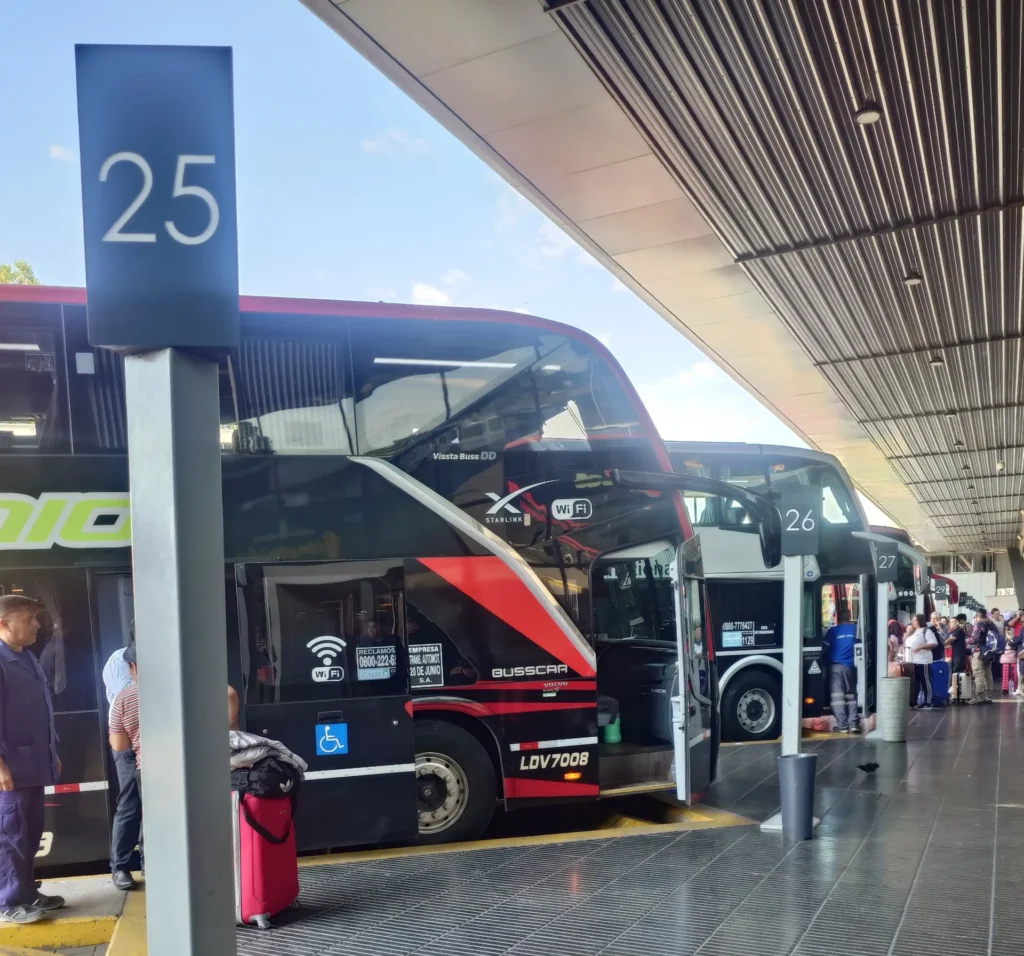
This is one of the most scenic bus journeys in the Andes
The journey between Mendoza and Santiago crosses the Andes through Paso Internacional Los Libertadores, through an incredibly dramatic section of the mountain range.
Even if it’s hot when you leave Mendoza or Santiago, bring something warm with you on the bus. Temperatures around the border can be considerably cooler than in either city.
Altitude is worth keeping in mind too. The road climbs considerably as it crosses the Andes. I find this route more likely to cause motion sickness from the mountain road than the kind of altitude sickness you might associate with places like Puno or La Paz, but it’s still not a journey I’d underestimate.
On the Chilean side, you’ll also travel through the famous Los Caracoles, a steep series of switchbacks zigzagging down the mountain. I personally love this part of the journey, but if you’re uncomfortable with heights or prone to vertigo, it’s worth knowing about beforehand.
When you cross matters
The time of year can make a big difference on this route, for two main reasons: weather and traffic.
In winter, the crossing can occasionally close because of snow and ice in the Andes. If you’re traveling during the colder months, it’s worth checking the border and road conditions before leaving.
But weather isn’t the only seasonal factor. This is a very busy border, particularly in June and July, and especially in December, January and February.
Mendoza and central Chile are very closely connected, not only geographically but culturally. Even though they’re in different countries, people on both sides share many similarities, and crossing the border to shop, travel or simply visit friends is extremely common. The people I know from Mendoza cross into Chile regularly.
On top of that local and tourist movement, this is also a major commercial route, with a lot of trucks traveling between Argentina and Chile.
All of that means that even though the border facilities themselves work very well, crossing isn’t necessarily quick. During busy periods, the amount of cars, buses and trucks can add considerable time to the journey.
What actually happens at the Argentina–Chile border?
One of the things that makes this crossing easier than many others I’ve done in Latin America is that the Argentine and Chilean border procedures are handled in the same border complex.
You don’t need to complete one country’s immigration process, travel farther down the road and then find the other country’s immigration office. Having both procedures in the same place makes the whole process much less tedious.
When you board the bus, you’ll also receive a QR code for a form that you need to complete for the border crossing. Fill it out before reaching customs so you have it ready when requested.
Once at the border, you’ll complete immigration and customs procedures and your luggage will need to go through a scanner.
Entering Chile? Take the SAG controls seriously
Both Argentina and Chile are major agricultural and livestock-producing countries, and both take phytosanitary controls and food-production standards very seriously. Restrictions on what you can carry across the border are designed to protect local agriculture and livestock from pests and diseases.
That said, Chile is particularly strict about bringing animal and plant products into the country.
When entering Chile, the SAG (Servicio Agrícola y Ganadero) controls what food, plants and animal products can cross the border. Luggage is screened, including both hand luggage and bags stored in the bus.
Don’t assume that something is fine just because it’s for personal consumption. Fresh fruit, nuts, honey, homemade or artisanal foods, raw meat and cured meats can all be an issue — even something as simple as a ham and cheese sandwich you prepared for the journey.
The most important thing is: if you’re carrying food and you’re unsure, declare it. Failing to declare restricted products can result in significant fines.
Controls entering Argentina tend to be less strict, but there are still restrictions on certain animal and plant products, so check the current rules for whichever country you’re entering before traveling.
How long does Mendoza to Santiago take by bus?
The driving distance between Mendoza and Santiago is around 360 km, and the journey can take about 7 to 8 hours under ideal conditions.
In practice, total trip times often reach 9 to 12 hours or more, depending on border wait times and seasonal traffic.
Keep that buffer in mind when planning the rest of your journey, especially if you’re considering an onward connection after arriving in Mendoza or Santiago.
Planning a trip through Argentina and Chile?
Border crossings, bus logistics, and long-distance overland routes can get confusing when you’re figuring out your itinerary on your own.
If you want to make sure your route is realistic, evaluate connection options, or avoid unnecessary logistics headaches, I can help you work through it with personalized 1:1 travel planning.