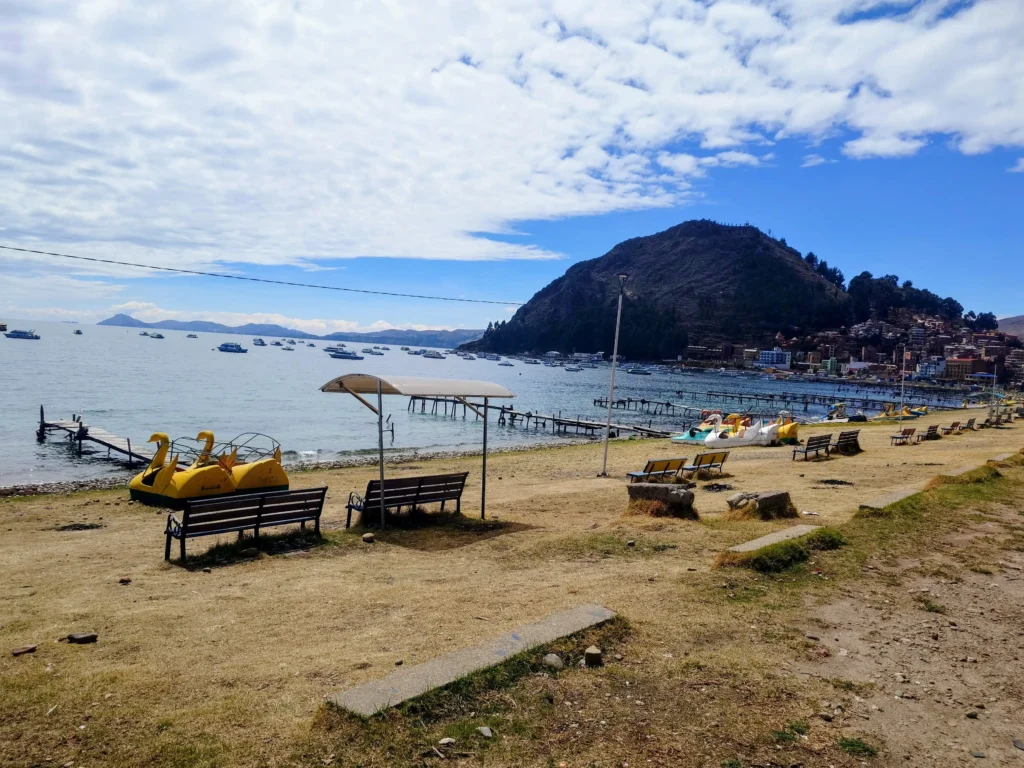
Border crossings are one of those things that can create a surprising amount of anxiety when you’re slow traveling. They’re also often poorly documented online — and the process isn’t the same from one country to another, or even at different border crossings between the same two countries.
After traveling overland throughout Latin America, I started keeping notes from my own border crossings and comparing my experiences with those of other travelers.
I crossed this border from Puno, Peru, to Copacabana, Bolivia, but most of the information about the border itself is useful if you’re traveling in either direction. Where something applies specifically to the Peru-to-Bolivia journey I took, I’ll point that out.
Table of Contents
Is Puno–Copacabana the right border crossing for your route?
The Puno–Copacabana border crossing is part of one of the most common overland routes between Peru and Bolivia, connecting Cusco / Arequipa → Puno → Copacabana → La Paz → Uyuni, or the same route in reverse.
Traveling from Puno to Copacabana by bus
I crossed the border in this direction, so the bus information and prices below are based on my own trip from Peru to Bolivia.
Two companies operate the route from Puno: Transzela and Titicaca. Both leave from Puno’s main bus terminal and offer fairly similar services, so I wouldn’t particularly recommend one over the other.
There is a morning departure at around 6:45 a.m. and another service at around 2 p.m. I recommend taking the morning bus and arriving at the terminal with some time to spare to buy your ticket there.
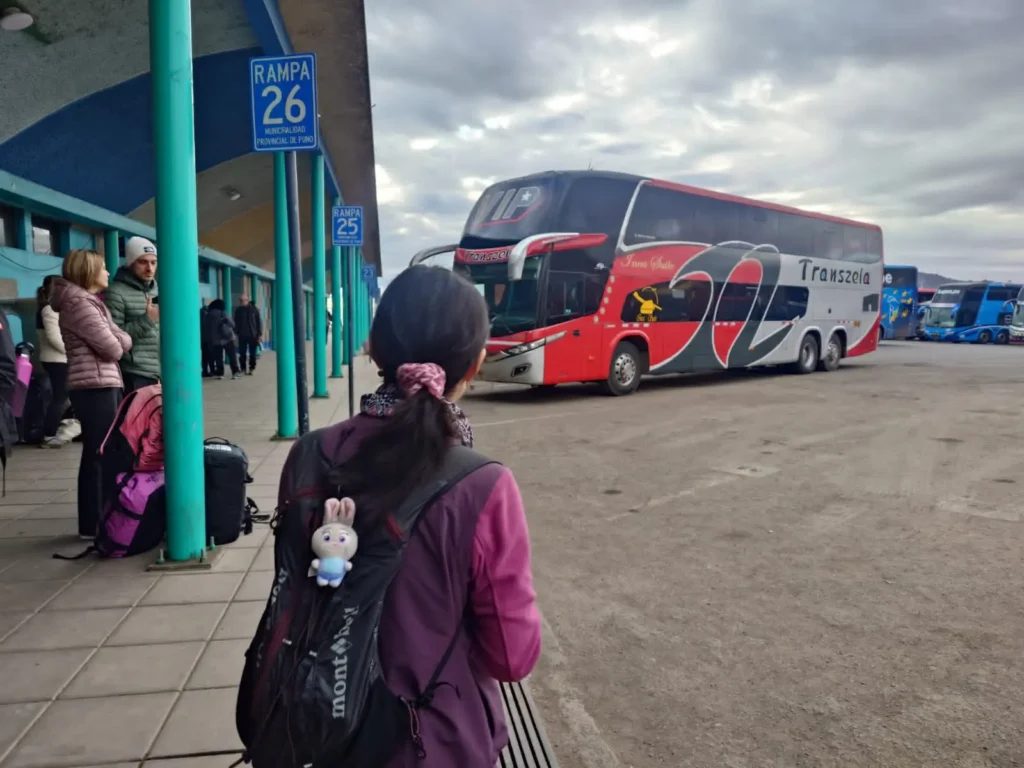
Bus terminal tip in Peru
Many bus terminals in Peru charge a small boarding fee (tasa de embarque), usually around S/2–4, which is separate from your bus ticket.
Keep some small change with you and pay it before heading to your platform. There can be a line at the counter, and you don’t want to discover you still need to buy it when your bus is about to leave.
Transzela’s stop before the border
If you’re traveling from Puno with Transzela, after about two hours on the road, the bus makes a fairly long stop at one of the company’s own roadside facilities before reaching the border.
This is a good opportunity to use the bathroom, but not to exchange money.
They’ll offer to exchange your Peruvian soles for Bolivianos here. Don’t do it. The exchange rate I was offered was extremely poor, and there’s no need to have Bolivianos before crossing. Once you arrive in Copacabana, you’ll find plenty of places to exchange money at much better rates.
Prices at this stop were generally quite high too — S/7 for a very basic coffee, for example. So I’d treat it as a bathroom stop rather than a place to stock up.
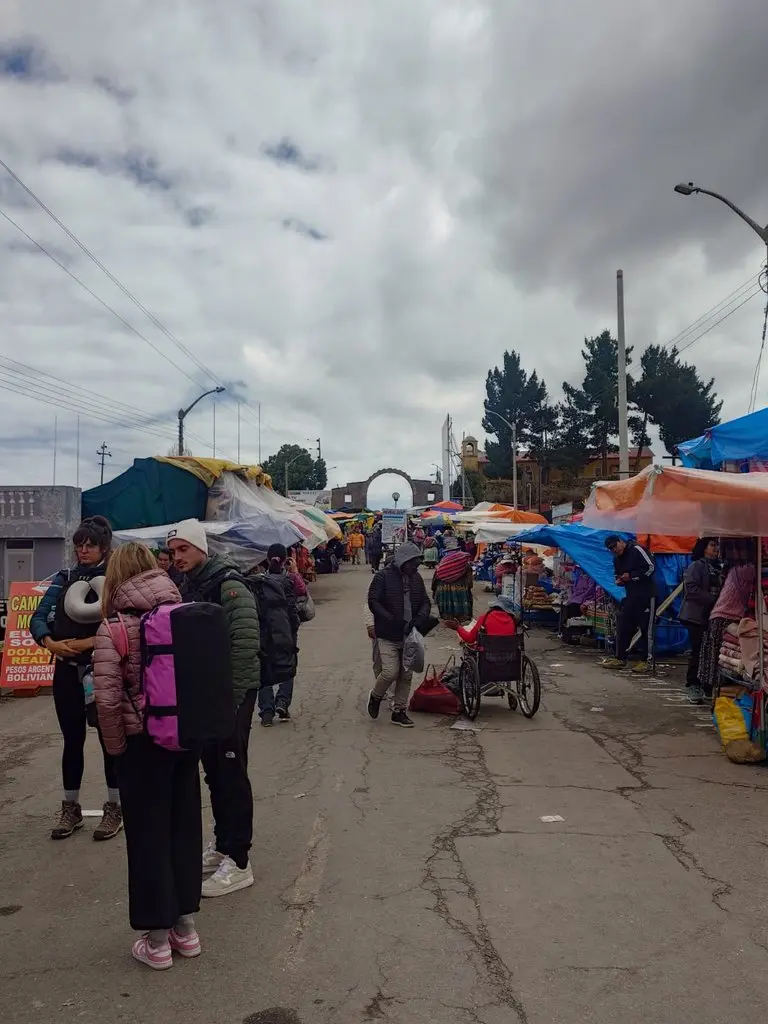
After immigration, you’ll continue walking on the other side. In my case, that meant at least another 1 km through the Bolivian side before reaching the second bus that was waiting to continue the journey to Copacabana.
So, traveling from Puno to Copacabana, the process looks roughly like this:
Bus from Puno → get off with all your luggage → walk to Peruvian immigration → exit Peru → cross the border on foot → enter Bolivia → keep walking → board the second bus → Copacabana.
Don’t underestimate the altitude
A couple of kilometers of walking may not sound like much, but this border crossing takes place at high altitude. Add all your luggage and a bit of uphill walking, and it can feel considerably harder than the distance suggests.
If you’re already acclimatized from spending time in places like Puno, Cusco or La Paz, this may not be a big deal. If you’re not, give yourself time and don’t rush the walk just because the rest of your bus is moving ahead.
Coca is widely used in this part of the Andes to help with the effects of altitude and is easy to find as leaves, tea or candy. If you know you’re sensitive to altitude, it’s worth preparing for it before the trip.
How long does Puno to Copacabana take?
The actual driving time between Puno and Copacabana is around 3 hours. But that’s only the time spent on the road: you also need to account for the stop before the border, getting off with your luggage, walking across the border and completing immigration.
In my case, the entire trip took approximately 4 hours.
There’s also one slightly confusing detail: Bolivia is one hour ahead of Peru. Most phones adjust automatically once they connect to a Bolivian network, so you may cross the border, check the time and wonder how the trip suddenly took an hour longer than expected.
It didn’t. You just changed time zones.
Arriving in Copacabana
Once you’ve completed Bolivian immigration and reached the second bus, the remaining journey to Copacabana takes around 30 minutes.
The bus drops you at Copacabana’s “terminal,” which is right in the center of town. It’s more of a central drop-off point than the kind of large bus terminal you might be expecting, and from there you can easily continue to your accommodation.
You’ll also find plenty of places to exchange money around the center. The rates I found there were much better than the one offered at Transzela’s stop before the border, so there’s no need to rush into exchanging your soles earlier.
Because Copacabana is so close to Peru, many businesses or taxis also accept Peruvian soles. Still, it’s worth getting some Bolivianos once you arrive: Copacabana is very cash-based, and card payments aren’t available, even at hotels.
Planning a trip through Peru and Bolivia?
Border crossings, bus logistics, and high-altitude overland routes can get confusing when you’re figuring out your itinerary on your own.
If you want to make sure your route is realistic, evaluate connection options, or avoid unnecessary logistics headaches, I can help you work through it with 1:1 personalized travel planning support.