There’s a specific kind of traveler who ends up doing a hostel work exchange. They’re not on a tight schedule. They move slowly. They want to stay somewhere long enough to actually feel it — not just pass through. If you’re doing slow travel in Latin America, you’ve probably already heard about this.
The idea is simple: you work a few hours a day at a hostel, and in return, you get a bed. Sometimes meals. Sometimes other perks.
It sounds like a good deal. And sometimes it genuinely is. But there are also a lot of people who walk into it with the wrong expectations — and end up frustrated, underprepared, or both. I’ve spent a lot of time in hostels across Latin America, I’ve worked in reception, and I have a background in tourism. So I want to give you an honest picture of how these exchanges actually work — and what you need to know before you try one.
What a hostel work exchange actually is
The terms vary a lot from place to place. Most exchanges involve somewhere between four and six hours of work per day — usually covering tasks like reception shifts, cleaning, helping guests, or basic admin. In some cases, hostels are looking for more specific skills: design, social media, murals, maintenance. What you get in return also varies: most commonly it’s a bed in a shared dorm, sometimes meals, occasionally other benefits depending on the hostel.
Because these are informal agreements, there’s no standard. That’s one of the most important things to understand going in.
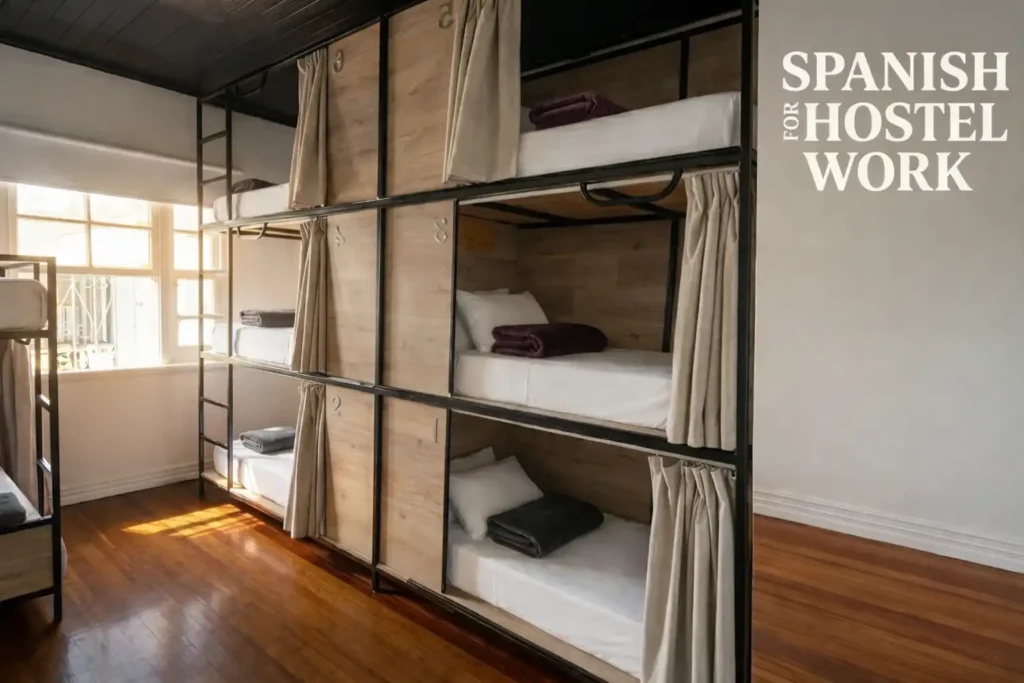
One thing worth knowing: doing a work exchange basically means having a lot of roommates. You’re living in the hostel, not just working there. The social dynamic is a huge part of the experience — maybe the biggest part. If the vibe doesn’t work for you, the whole thing doesn’t work.
How to find one
There are a few ways people find hostel exchanges.
Some travelers write directly to hostels they’ve found on Booking or Instagram — a cold intro email explaining who they are, what they can offer, and asking if there’s an opportunity. This can work, but response rates are unpredictable, and it helps to send a lot of emails at once since many won’t reply.
Others find exchanges through Facebook or Telegram groups dedicated to slow travel, long-term backpacking, or specific regions.
That said, I personally recommend using a platform like Worldpackers. It has an annual subscription fee, but it offers something the other options don’t: a clearer framework. Agreements are more structured, expectations are more visible upfront, and — this matters a lot — if you arrive somewhere and it’s not working out, the platform can help you find an alternative and even cover accommodation during the transition. I once met someone who was staying at the same hostel as me and asked Worldpackers to find them another place because the bed was too small for their height. It sounds like a minor thing, but when you’re living somewhere for weeks, it’s not. The platform sorted it out. That kind of support makes a real difference, especially the first time you do this.
One more thing about your application: don’t just list the skills that are obvious for a hostel role. If you’re a decent photographer, know how to paint a mural, or have a background in software or design — mention it. Hostels are small operations and that kind of thing can make your profile stand out in ways you wouldn’t expect.
What to expect — and what not to
Here’s where I want to be direct, because this is the part that trips people up most.
Don’t think of it as a financial equation. If you’re calculating how many hours you’re working versus what a bed in that city costs per night, the math is probably not going to feel fair. That’s the wrong frame. A work exchange is not a job. If you approach it looking for proportional monetary compensation, you’re likely to feel like you’re losing.
Where exchanges tend to work well is when you’re looking for something else: a slower way of being in a place, daily contact with other travelers, a more local rhythm. It’s one of the few ways to be in a destination without feeling like a tourist — you’re inside the daily life of the place, not observing it from the outside.
The experience varies enormously depending on the hostel. Some places have a clear program and offer real value beyond the bed — city tours, language exchange, connections to local life. Others don’t think much about it and the experience ends up feeling transactional or poorly managed. And then there’s something harder to measure: the vibe. A hostel can look beautiful in the photos — and that’s not false advertising — but if the people there don’t click with you, it can still be a bad experience. Some hostels run on party energy. Others are quieter, more focused on rest and travel. Neither is wrong, but it matters a lot that it matches what you’re looking for.
I’ve heard some real horror stories. People arriving to find the role nothing like what was described. Situations where the dynamic between staff and exchange participants was tense from day one. It happens.
Both sides carry responsibility. A lot of frustrating experiences come from unclear expectations — not necessarily from bad faith. That’s why the conversation before you arrive matters more than most people realize.
Before you commit: things worth clarifying
Before agreeing to an exchange, it’s worth getting some things in writing — or at least discussed clearly:
- Exactly how many hours per day, and which tasks
- Which days are yours to use freely
- What’s included: just the bed? meals? laundry? Wi-Fi?
- How long the exchange lasts, and what happens if either side wants to end it early
- Where you’ll be sleeping (dorm? private room?)
Know your own limits before you get there too. What tasks are you genuinely okay doing? How many hours feels reasonable? What would make you want to leave? Having those answers ready — and being able to say them out loud — makes it easier to recognize early on whether something is working or not.
When it’s not working: it’s okay to leave
I once saw someone at a hostel in Camboriú who had arrived the day before, had a work exchange planned for several weeks, pack up their bag on the second night, say goodbye to everyone, and just leave. No drama. They just knew it wasn’t for them.
That’s actually a healthy response. You are not an employee. You don’t owe the hostel more than what you agreed to. If you arrive and the situation is nothing like what was described, or the dynamic just doesn’t feel right — even for reasons that are hard to explain — you’re allowed to leave.
Sometimes a conversation can fix things. Sometimes it can’t, and it has nothing to do with anyone being wrong — it’s just not the right fit. The good exchanges often extend naturally beyond what was originally planned. The ones that don’t click don’t need to be forced.
One more thing: Spanish
If you’re planning a hostel work exchange in Latin America, Spanish is not optional for most hostels. It’s usually a requirement — and intermediate level is a pretty common baseline. If your profile shows no Spanish at all, a lot of hosts simply won’t reply.
That said, not everyone who reaches out to me is starting from zero. A lot of slow travelers in Latin America already have some Spanish — enough to get by day to day — but don’t feel confident enough to use it in a work context. Front desk is a different situation than ordering food or asking for directions. You’re handling check-ins, answering questions about the city, dealing with complaints, understanding guests from different countries with different accents. That specific vocabulary and confidence is something you can actually prepare for.
So whether you need to build your level before applying, or you already have the Spanish but want to feel ready for the job — that’s exactly what the classes are designed for.