This is a topic that concerns many travelers before arriving in Latin America. And for the rest, it should be — although it’s often overlooked. I say this because I’ve seen many foreigners arrive expecting to manage their money exactly the same way they do at home.
Sometimes that works. But not always.
Going to a large capital city is not the same as visiting a smaller town or a more rural area. And beyond that, Latin America is a very diverse region. Each country has its own economic system and its own particular quirks. Some are more straightforward for foreigners to navigate. Others, not so much.
So, which is the best way to manage money while traveling here?
As is often the case, there isn’t a single answer. Let’s break down the most used payment methods, with some key things to keep in mind before you arrive.
Table of Contents
Quick practical tips for managing money in Latin America
• Always carry some cash, especially outside major cities.
• Don’t rely on a single payment method.
• Check ATM fees and withdrawal limits before taking out money.
• Compare exchange rates before changing large amounts.
• Be aware that payment systems vary from country to country.
How money actually works on the ground
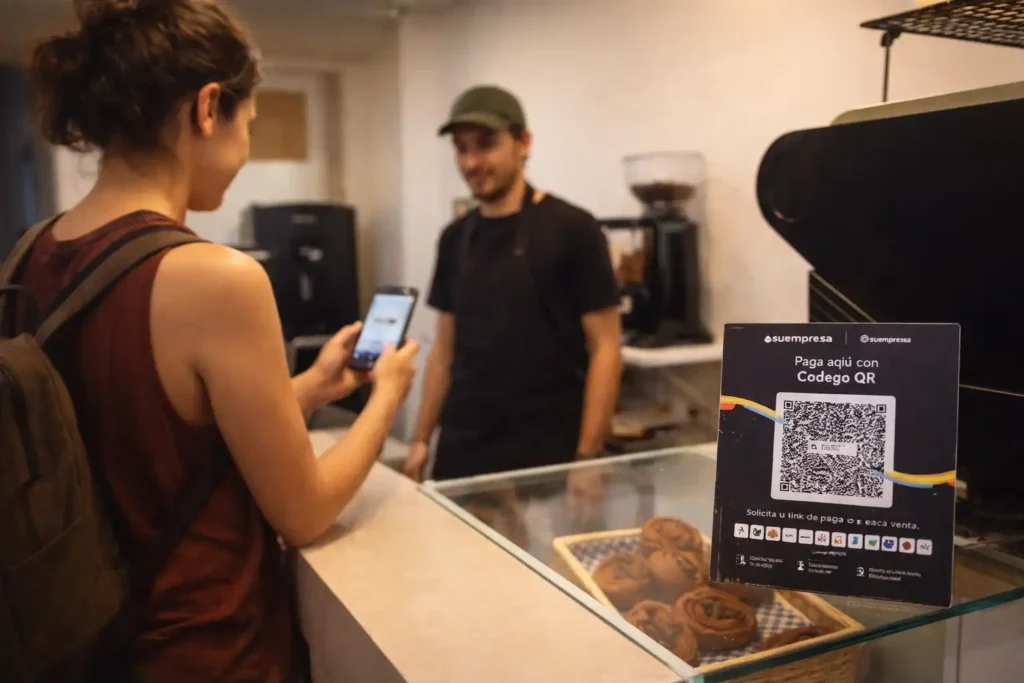
Across much of Latin America, paying with cards is normal. In large cities especially, most businesses accept debit and credit cards, and contactless payments through phones or NFC are increasingly common.
But this doesn’t mean the system works the same everywhere — or even within the same country.
For example, in Colombia I noticed a big difference between cities. In Medellín, many businesses added around 10% to the price when paying with a card, so I ended up using cash much more often. In Bogotá, on the other hand, card payments are accepted almost everywhere. Even when buying something small like a coffee, I often pay directly with my phone.
This kind of variation is common in the region. What works easily in one city may not work the same way somewhere else. And once you move outside large urban areas, smaller businesses tend to rely more on cash, especially for low-value purchases.
For that reason, it’s always a good idea to keep some cash on you, even if you plan to pay mostly with cards.
Another factor to keep in mind is connectivity. Many digital payment systems depend on having internet access or mobile data.
If you’re relying on your phone for payments, maps, or banking apps, having reliable connectivity becomes part of managing your money while traveling — I explain more about this in Apps and resources: the essential toolbox for traveling independently in Latin America, where I discuss eSIMs and local SIM cards.)
The emergency reserve: why you should always carry some cash
Even in large and modern cities, there are situations where cash is the only option.
One example I encountered in Brazil was public transportation. In the city where I was staying, the only way to purchase the public bus card was with cash. Since the system is public, that’s simply how it works. Without cash, you can’t get the card in the first place.
And beyond that, things happen. Card terminals stop working, internet connections fail, or your bank blocks a transaction abroad.
For all these reasons, keeping a small cash reserve with you is one of the simplest ways to avoid unnecessary stress while traveling in Latin America.
Safety factor – You gotta keep’em separated
A small safety tip — which might sound like common sense for many travelers — is that if you’re carrying a cash reserve, it’s better not to keep all your eggs in the same basket.
What I always do is keep some cash in my wallet, but I also keep another reserve in my backpack. I follow the same logic with my documents. Since I’m Latin American, in most countries in the region I don’t need to carry a passport. But I still keep it in my luggage just in case something happens to my wallet or my local ID.
The idea is simple: always have a backup.
The same applies to cash. If you lose your wallet, or something happens while traveling, having a small reserve stored somewhere else can save you a lot of trouble.
And one more thing — be careful with checked luggage. Bags get lost sometimes, and wallets can get stolen. Keeping your important documents and some emergency cash with you is simply the safer choice.
Exchange – places and rates
Changing money at the airport
For many travelers, exchanging money at the airport is the first thing they do when arriving in a new country. It’s convenient, and after a long flight it feels like the easiest solution.
The problem is that airport exchange rates are usually very poor. In many cases you end up losing a noticeable amount of money compared to what you would get in the city.
If you really don’t have another option, the best approach is to exchange only a small amount — just enough to get by at the beginning.
But in many situations you don’t actually need to exchange money at the airport at all. Most airport businesses accept credit cards if you want to buy food or drinks. And to reach your accommodation, you can usually use services like Uber or other transportation options that accept card payments.
Because of that, I normally skip exchanging money when I arrive in a new country. I go directly to where I’m staying and exchange cash later in the city center, where rates are usually better.
Understanding exchange rates is the first step toward building a realistic travel budget — I explain how I estimate mine in this guide.
But, where to exchange?
Exchange rates in Latin America can be surprisingly hard to navigate. Each country works differently, and there’s no way to know before arriving exactly what the political or economic context will look like.
You don’t need to be an expert to exchange money. But it helps to understand that exchange rates can move quite a lot, sometimes even within short periods of time. This is Latin America, after all. Currency values often fluctuate depending on what’s happening in the country.
A good example of this happened to me in Chile. I spent New Year’s there after an election year. A new president had been chosen but would not take office until the end of the month. Even though the political transition hadn’t formally happened yet, there were already movements in the currency market. That’s not something travelers need to follow closely, but it shows why exchange rates can shift depending on the moment.
My approach is simple: before exchanging money, I check Google to see the current exchange rate. I assume I won’t get exactly that rate when exchanging cash, but it gives me a reference point — a rough idea of what I’m willing to accept. Once I have that in mind, I go out and ask around.
In many Latin American cities, exchange places tend to cluster together. In tourist areas especially, there is often a street or small area where several exchange businesses operate close to each other. Sometimes it’s three or four shops, sometimes ten or more. If you look on Google Maps for “exchange” or “casa de cambio,” you can usually find where this cluster is.
Once you’re there, walk around and ask for the rate in several places before deciding. Because the businesses are competing with each other, you’re more likely to find a better price.
Another thing many travelers don’t expect is that Latin America can be quite informal. In some places, bargaining over the exchange rate is normal. If you’re not comfortable doing that, simply say “no, thank you” and move on to the next place.
It’s also important to be aware that not every exchange place will immediately offer the best rate. Sometimes they see that you’re a foreigner and quote a different price. This happens to me as well, even though I speak Spanish. Asking in multiple places helps you understand what the real range actually is.
Finally, try to ask locals for advice when possible — hotel staff, hostel workers, or anyone who is not directly offering to exchange money themselves. People who are not involved in the transaction will usually give you more honest guidance about where to go.
Small Bills are King
In most countries in Latin America, large bills are not the best option when making small purchases. (Argentina is a bit of an exception because of inflation, but in most places the situation is different.)
If you try to pay for something small with a large bill, people may look at you like you’re making their life difficult — and sometimes they simply won’t have the change.
Because of that, it’s a good idea to break large bills whenever you make bigger purchases. That way you end up with smaller notes for everyday spending.
If you’re getting on a bus, buying a coffee, or picking up a small souvenir, paying with smaller bills will usually make the transaction much easier.
Ask the price before ordering
Another simple habit that helps avoid awkward situations is asking the price before ordering.
In many places across Latin America, especially when food is being prepared or served informally, prices are not always clearly displayed. Locals are used to asking, but many travelers don’t think to do it because they assume the price will be reasonable.
Most of the time it is. But occasionally a foreign visitor may be quoted a higher price after the fact, which can turn an otherwise normal meal into an uncomfortable situation.
A quick “¿Cuánto cuesta?” before ordering is usually enough to avoid that problem.
If you’re not comfortable asking in Spanish yet, tools like translation apps or AI can help you navigate these small interactions more easily. I explain how I use them in my guide on using ChatGPT as a travel translator and language assistant.
ATMs: limits, fees and availability
For many foreign travelers, withdrawing cash from ATMs is the easiest way to get local currency. ATMs are widely available across Latin America and people use them every day, so it’s not difficult to find one.
One thing to check before traveling is that your card works internationally. Cards issued by major networks like Visa or Mastercard are usually accepted without problems.
Withdrawal limits
Before using an ATM abroad, it’s worth checking your bank’s daily withdrawal limit. Your bank may have its own limit, and local ATMs can also impose their own restrictions.
In some countries these limits can be quite low. For example, in some ATMs in Colombia, withdrawals are limited to around $100 to $150 USD per transaction. That means you may need to make several withdrawals if you need more cash.
Decline the ATM’s currency conversion
When withdrawing money, the ATM will often ask whether you want the transaction converted into your home currency.
Always decline this option.
ATMs apply their own exchange rate, which is worse than the one your bank will use. By declining the conversion and choosing to withdraw in the local currency, you let your bank handle the exchange instead.
Safety tips when using ATMs
A simple precaution is to use ATMs located inside bank branches whenever possible, rather than standalone machines on the street.
If something goes wrong — for example if the machine keeps your card — it’s much easier to get help immediately when the ATM is inside a bank.
It’s also a good idea to withdraw money during business hours and in busy areas. Not to make anyone paranoid, but taking cash out at night on a quiet street is simply not the safest situation in any big city.
Stick to Visa and Mastercard: Fintech cards vs traditional banks
Many travelers assume that because their card (like Wise or Revolut) doesn’t charge withdrawal fees, the ATM in Latin America won’t either.
In reality, local ATMs often apply their own fees. In countries like Colombia or Argentina, the machine itself may charge the equivalent of 5–10 USD per withdrawal, regardless of what your bank says. For long-term travelers, those fees can add up quickly over a month.
When ATMs aren’t an option
Sometimes withdrawing cash from an ATM simply isn’t possible. Your card might not work, the machine may reject the transaction, or you might run into withdrawal limits.
One alternative I occasionally use is sending money to myself through Western Union. It’s an easy way to access local currency using your own bank account.
You just send the transfer online with your personal information and use the address where you’re staying — for example, your hotel or hostel — and then collect the cash at a local Western Union office.
It’s not always instant. In some cases the transfer can take up to a couple of days to become available.
Before sending the money, it’s a good idea to check on Google Maps (or whichever map you use) that there is a Western Union agency nearby. That way you avoid sending the transfer and then realizing there’s nowhere convenient to pick it up.
When collecting the money, the agency will ask for the transfer code and a valid ID — usually your passport or the same identification you used when sending the transfer. It’s important that the name on the transfer matches your ID exactly, so if you have more than one last name or a middle name, make sure to include your full name when creating the transaction.
QR and digital payments: country differences travelers should know
QR codes and transfers through digital wallets are probably one of the most common forms of payment across Latin America. They are easy to use and widely accepted — both by large businesses and within the informal economy.
The challenge for travelers is that each country has its own system, and some of them leave foreigners behind.
Let’s take a look at how this works in some of the most visited countries in Latin America.
Brazil and Argentina
Brazil has an official system called PIX. It was created by the government and is used everywhere — from paying for a hotel reservation to buying a coconut at the beach. It’s extremely convenient, and many Brazilians barely carry cash anymore because they rely almost entirely on PIX.
As a tourist, it is technically possible to get a CPF number (a government identification that allows you to open a local bank account), but to be honest there are usually easier ways to get by.
In Argentina, QR payments are widely used through Mercado Pago, part of the Mercado Libre ecosystem. Much like in Brazil, QR codes and transfers through this digital wallet are common in everyday transactions. The difference is that Mercado Pago is a private platform rather than a government-issued system.
It’s also worth mentioning that in Argentina it is almost impossible for foreigners to open a Mercado Pago account. There are other QR payment options depending on the bank you use, but they are not as universal as Mercado Pago.
For both Argentina and Brazil, I personally use Airtm. It’s a digital wallet that allows me to access both types of payments. (This isn’t an affiliate recommendation — I mention it because in my experience it offers good exchange rates and it’s relatively easy to open an account from abroad.)
For PIX specifically, there are also some international platforms that allow QR payments, such as Wallbit or, more recently, Wise.
Peru and Colombia
Peru relies heavily on Yape and Plin, while Colombia widely uses Nequi and Daviplata.
These systems work a bit differently for travelers. In my experience, I couldn’t find alternative apps that allow the same type of payments, and opening an account requires a local ID number. For tourists, that generally means these systems aren’t accessible.
Both countries also have quite informal economies, and some businesses apply different prices depending on whether you pay with cash or with a card. Since QR payments are not available to foreign visitors, paying in cash is the simplest way to avoid extra charges.
Mexico
Mexico is a case of its own. It also has a government-created QR system called CoDi, but in practice almost nobody uses it.
In the Mexican economy, cash is still king, especially for street food, markets, and small businesses. When payments are not made in cash, contactless cards are usually the most common option.
Final thoughts: flexibility is your best currency
As we’ve seen throughout this article, Latin America is a very dynamic region. Not only are countries different from one another, but economies can also change quickly. Exchange rates move, payment technologies evolve, and the way people use money continues to shift.
What traveling through the region has taught me is that flexibility is the best approach. I try to keep several payment options available so I don’t end up in an uncomfortable situation.
None of us are experts in every system we encounter, and we’re all learning along the way. Sometimes you won’t get the best exchange rate or manage your money in the most efficient way. That’s part of traveling.
The best thing you can do is stay informed, ask questions, and observe how people around you handle everyday transactions. Talking to locals and paying attention to how things work on the ground will help you understand each place much better.
Planning a trip around Latin America?
If you’re trying to figure out how to connect destinations, whether your route is realistic, or how much time and money you’ll actually need, I can help you work through it.
I offer personalized travel planning support to help you evaluate your options, answer practical questions, and make better decisions about your trip.