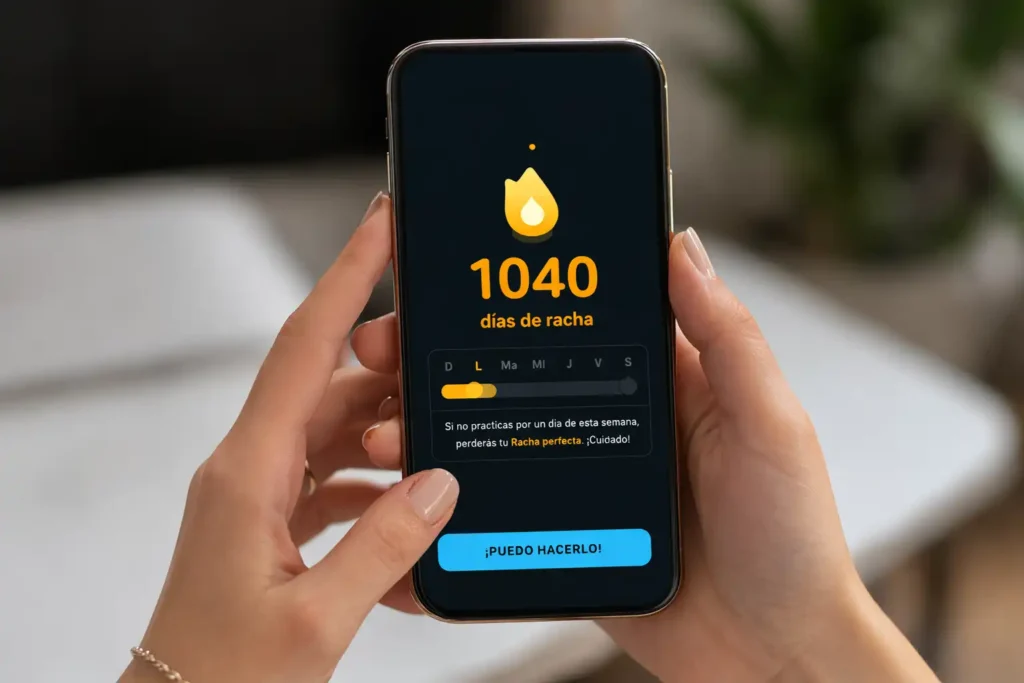
Duolingo is, and has been for over a decade now, the most widely used language learning app in the world. Millions of users log in every day to try to learn a new language.
And I get it. I’ve completed some courses on it myself. Using Duolingo feels like you’re playing — but not like you’re wasting time. It feels like you’re actually learning something while enjoying it.
But at some point, I had to ask myself: is the owl really teaching a new language?
After finishing the courses, I wasn’t really better at Brazilian Portuguese. I knew more words. I understood more. But using the language was a different story.
While studying to become a Spanish teacher, I began looking into the different approaches to learning a second (or third, or fourth) language. I went through research on how languages are most effectively learned. And that’s when the question became more serious. So I want to look at what Duolingo does very well — and also why finishing an entire course doesn’t necessarily mean being able to actually use the language.
Table of Contents
Gamification: Why It Works (And Why It Feels So Good)
One of the main reasons Duolingo is so appealing is that it relies heavily on gamification. The entire structure of the app is built like a game: levels to complete, points to earn, streaks to maintain. That design is not accidental. It’s what keeps users coming back.
And the truth is, learning through games is not a bad idea. In fact, studies have shown that learning through games — especially video games — can be highly effective. Games align well with how the brain acquires new skills.
So if gamification works — and it clearly does — what exactly is it doing for Duolingo?
Why Duolingo Feels Safe (The Affective Filter)
Language learning can feel exposing. Saying something wrong in front of others can feel embarrassing — sometimes even ridiculous. Performance anxiety in traditional classrooms is real, and it slows people down more than we admit.
Duolingo removes that pressure. The game is played alone. Mistakes happen privately.
But there’s another reason the environment feels safe.
Video games are built around obstacles. In order to move forward, you try different strategies. Sometimes the first attempt doesn’t work. Sometimes you repeat it the same way. Other times, you adjust and try something different.
Failure isn’t a verdict — it’s information.
In Duolingo, losing a life isn’t catastrophic. The same exercise can be repeated immediately. The cost of getting it wrong is low.
That shift matters. While playing, mistakes and retries are part of progress — not proof of incompetence.
The Dopamine Engine
Progress is what keeps people hooked. Advancing through levels, unlocking new chapters, protecting a streak — it’s addictive.
The structure taps into the same reward cycles that make social media and gambling so hard to put down. That’s why it’s easy to look up and realize it’s 1 a.m., and the next lesson feels impossible to skip.
Streaks and in-app rewards raise the stakes just enough to keep you coming back. The platform understands something fundamental: small, frequent wins feel good.
And feeling good makes it easier to stay engaged. Motivation is one of the hardest things to sustain when learning a language, especially over long periods of time.
Gamification can help with that. Turning learning into something that feels rewarding makes it easier to return the next day. But there’s also a difference between building motivation and building an addictive system — and Duolingo sits somewhere in that tension.
Language in Your Pocket
Convenience is power.
There’s no need to schedule a class or set aside two uninterrupted hours. A lesson can take five minutes. It fits into a commute, a lunch break, a moment of boredom.
The language lives in your pocket. Grammar is broken into small, manageable pieces. It feels accessible — almost effortless.
That accessibility lowers the barrier to entry. It transforms a daunting task — learning a whole language — into something that feels as simple as checking a notification. It makes Spanish feel less like a distant, impossible goal, but something that fits right between your morning coffee and your first email.
The Power of Seeing It Again (and Again)
Repetition works. Seeing the same word over and over increases familiarity. Patterns become recognizable. Vocabulary starts to stick.
Duolingo excels at this. The same structures reappear in slightly different forms until they feel automatic.
But repetition mostly builds short-term familiarity. Recognition improves. Retrieval becomes faster.
That doesn’t automatically mean the language is ready to be used in real communication.
What Duolingo is great at is making you remember words when the owl asks for them. The challenge is remembering them when we need them in real life.
What is the best angle to learn a language?
A historical perspective:
One of the central questions in second-language teaching is surprisingly simple: how much should we focus on grammar, and how much should we focus on communication?
Different teaching methods have answered that question in very different ways over time.
Some approaches focused heavily on structure and rules. Language learning meant understanding grammar, memorizing patterns, and practicing correct sentence formation.
Others leaned in the opposite direction, emphasizing pronunciation and repetition. Many people still remember the method that was popular in the 90s: listening to cassette tapes and repeating phrases over and over again, hoping that the structures would eventually stick.
In recent decades, however, the consensus in language teaching has moved somewhat toward the middle. Communication is usually the priority, but grammar and pronunciation still matter. The difference is that they are taught in support of communication, not as the final goal.
One example is task-based learning, the model I was trained in while studying to become a Spanish teacher — and the one I use in my own classes. In this approach, students work toward completing a communicative task, and grammar, pronunciation, and vocabulary are practiced along the way as tools that help them accomplish it.
In a way, it works similarly to how many video games teach players. You don’t learn every tool before the game starts. Instead, you encounter obstacles, and the game gives you what you need at the moment you need it. Think of something like Super Mario: you learn how to jump, run, and use new elements while moving through the level, not before.
The focus is not just on producing correct sentences, but on using the language to express meaning.
Where Duolingo fits:
This is where things become a little more complicated.
Duolingo uses gamification very effectively. But when it comes to the way it actually teaches language, the method behind the exercises looks much closer to something older.
The main instructional tool Duolingo relies on is drills.
A drill is a structured exercise designed to reinforce grammar patterns and pronunciation through repetition. The focus is on practicing linguistic forms — the structure of the language itself — rather than on communication.
Of course, Duolingo adds a significant layer of technology to this. The exercises are interactive, adaptive, and wrapped in a game-like environment. But at its core, the learning mechanism looks surprisingly familiar. In many ways, it resembles the older approach where learners repeated phrases again and again — the kind of method many people remember from language cassette tapes in the 90s.
Drills usually work in two stages. First, the learner is presented with a model sentence that contains the structure being practiced. Then comes the production stage, where the learner repeats or reproduces that model quickly and mechanically, without necessarily thinking about the underlying rules.
The big reveal: reproducing vs creating
In practice, language learning is usually taught through three stages: presentation, practice, and production.
First, the new language is introduced. Then learners practice it in controlled ways. Finally, they are expected to produce it — using the language to express their own ideas.
This sequence reflects an important shift in how languages are taught. What researchers eventually realized — something that sounds obvious now, but wasn’t for a long time — is that being able to reproduce grammatically correct sentences is not the same as creating your own.
Repeating a structure correctly shows that you recognize it. But real communication requires something more: the ability to think, choose words, and build a sentence in order to express a meaning.
In other words, producing language is not the same as reproducing it.
From repetition to real communication
If the goal is real conversations, then the missing step is practice creating language — not just recognizing it.
Communicative approaches to language learning focus on exactly that. Instead of simply identifying the correct answer among four options, learners work with unpredictable situations where meaning has to be negotiated. You don’t always know what the other person will say next. You need to respond, adapt, clarify, and express your own ideas.
That shift changes how the brain engages with the language. It moves from recognizing correct sentences to generating them. Grammar and vocabulary are still there, but they are used as tools to communicate something meaningful.
It also brings in elements that apps struggle to simulate: context, tone, regional variation, and social nuance. The same sentence can sound natural, awkward, polite, or rude depending on the situation. Learning to navigate those subtleties is part of learning the language itself.
Gamification can absolutely play a role in learning. Motivation matters, and tools like Duolingo can be useful for building vocabulary or creating a daily habit. But eventually the language has to move beyond exercises and into communication.
That’s the kind of practice I focus on in my Spanish classes. Instead of repeating sentences, we work on expressing ideas, responding to real situations, and building the confidence to actually use the language.
If your goal is simply to review vocabulary every day, an app might be enough. But if the goal is to speak Spanish and respond naturally in real conversations, the practice has to go a step further.
Want to practice Spanish through real communication?
If your goal is simply to review vocabulary every day, an app might be enough. But if the goal is to speak Spanish and respond naturally in real conversations, the practice has to go a step further.
If that’s what you’re looking for, you can learn more about how I work with students here: Work with me.
➜ Continue reading:
Why is my Spanish stuck?